Two years ago, I was teaching 8th grade math at a school in Portland. At the end of a fractions unit, I looked at the test results for one of my classes and saw the pattern I had seen many times before: roughly a third of students had not met proficiency. I pulled the papers and started reading through the wrong answers.
What I found was not a single struggling group. It was three distinct groups, each making errors for different reasons. Some students had clearly understood the concept of common denominators and had made arithmetic mistakes. Some had started the process but applied the wrong operation partway through — they knew the goal but had an incomplete procedure. And a small cluster of students — about five of them — had answered questions in a way that made it clear they did not understand what a fraction was at a foundational level. They had been adding numerators and denominators as if they were separate integers.
I had not caught the third group earlier because their written work on earlier assignments had not obviously flagged them. They were doing well enough on simpler fraction tasks to pass below the attention threshold. But now, six weeks into the unit, they were operating on a model of fractions that was going to block them from algebra readiness the following year unless it was corrected at the conceptual level — not with more fraction practice, but with a rebuild of what a fraction actually represents.
That was the problem we built Brainpathio to solve.
The Core Idea
Most adaptive learning platforms adjust difficulty. Some adjust content sequence based on performance patterns. Brainpathio does something different: when a student makes an error, the system generates a hypothesis about which specific misconception most likely explains that error, then routes the student to a targeted diagnostic question designed to test that hypothesis.
The question is not a hint. It is not a simpler version of the same problem. It is a probe — specifically designed to differentiate between two or three competing explanations for what the student's error could mean. The student's response to that probe either confirms or revises the hypothesis, and the engine updates the student's misconception profile accordingly.
This generates two outputs that are currently missing from most adaptive systems. For the student: a learning path that actually addresses the root cause of their errors, rather than providing more practice on top of an unresolved conceptual gap. For the teacher: a named, specific alert — "this student shows a pattern consistent with whole-number interference in fraction addition" — rather than "this student is below proficiency on fractions."
What We Built
The foundation of Brainpathio is the misconception taxonomy — a structured catalog of documented conceptual errors in K-12 STEM, organized by domain and grade band. We built this taxonomy from three sources: direct classroom observation over the development period, analysis of graded work samples from teachers who participated in our research phase, and the existing academic literature on mathematics and science misconceptions, which is substantially richer than most EdTech products acknowledge.
The taxonomy currently covers algebra (grades 6-9), fractions and rational numbers (grades 4-7), proportional reasoning (grades 6-8), and physical science force and motion concepts (grades 6-8). Each misconception entry includes a description, the documented surface manifestations, the most reliable diagnostic question patterns, and the instructional interventions with the strongest evidence base for that specific misconception type.
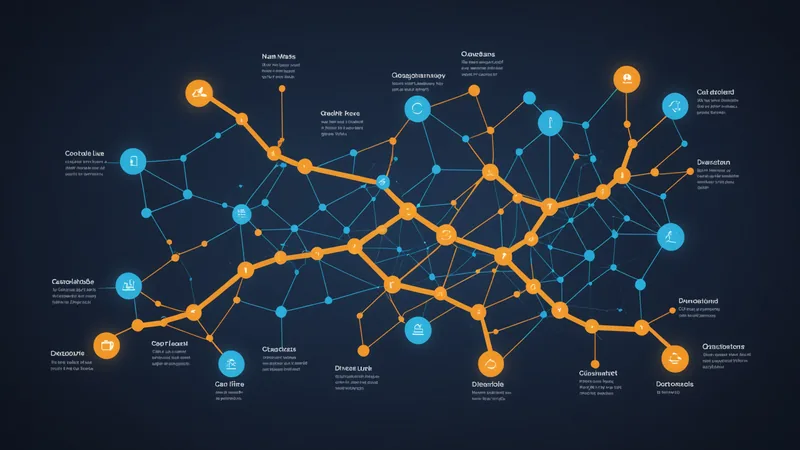
Built on top of that taxonomy is the adaptive engine — the software component that tracks student response patterns across a session, generates and updates misconception hypotheses, routes diagnostic questions, and produces the teacher-facing alert feed. The engine is designed to operate within a normal assignment context. Students experience it as a slightly different kind of practice problem set. Teachers see a dashboard that surfaces alerts when a student's response pattern crosses a threshold suggesting a specific misconception.
The integration layer connects to Google Classroom and Canvas for assignment delivery and rostering, and exports misconception data in formats compatible with district reporting workflows.
What This Is Not
We want to be direct about what Brainpathio does not do, because the EdTech space has a history of overclaiming.
Brainpathio does not replace teacher judgment. The alerts the system generates are hypotheses — labeled, specific hypotheses with a confidence indicator — not diagnoses. A teacher who receives an alert about a student's variable-confusion pattern should treat it as a reason to investigate, not as a confirmed finding. The system's accuracy improves as it accumulates more response data per student, but early alerts especially should be verified by the teacher before driving a significant instructional change.
Brainpathio does not solve the time problem. Knowing that a student needs conceptual work on fraction foundations is useful. It does not create the instructional time to do that work. Teachers in our development research consistently told us that diagnosis without intervention support is only half a solution. We are building intervention suggestion features — specific 5-minute reteach activities mapped to each misconception type — but those are not part of the initial pilot. The core product right now is the diagnostic layer.
We are also not claiming the taxonomy is complete. It is not. We have documented the misconception types with the strongest research base and the highest frequency in our observation data. There are misconception types in domains we have not yet covered, and likely misconception types in our covered domains that we have not yet documented. We will be transparent about coverage gaps as we learn more from pilot data.
The Pilot Cohort
We are opening our first pilot cohort to STEM teachers in grades 6-9 in the Portland metro area. The pilot runs for eight weeks. Participating teachers get full platform access, weekly misconception summary reports, and an end-of-pilot analysis that maps their classroom's misconception patterns against Common Core Math and NGSS standards.
We are looking for teachers who are willing to use Brainpathio as a regular part of their assignment cycle — not as a bolt-on tool, but as the primary problem set delivery mechanism for one content unit. We want to see how the engine performs under normal classroom conditions, with normal variation in student engagement and normal pacing pressures.
In exchange, we commit to weekly check-ins, responsive support for any technical issues, and complete transparency about what the system detected and what it missed. We will share the pilot findings — including the places where the engine underperformed — because an honest account of what early diagnostic systems actually catch is more useful to the field than a polished product announcement.
If you teach STEM in grades 6-9 in the Portland area and this sounds like something worth trying, we would genuinely like to hear from you at [email protected].