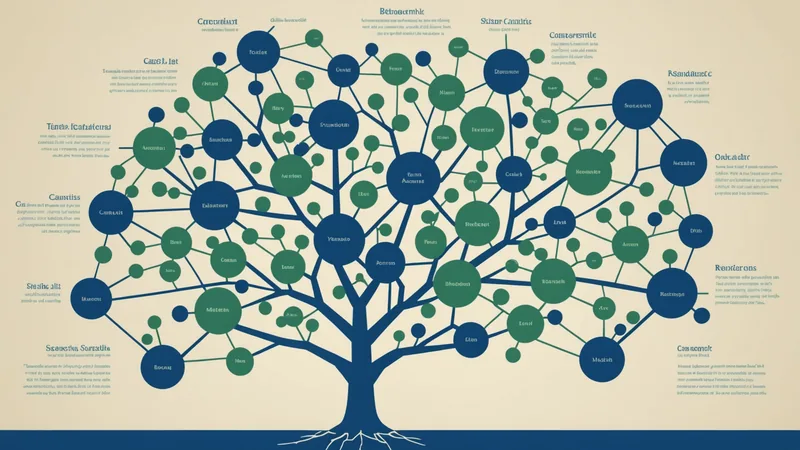
Building a misconception taxonomy is not the same thing as listing common mistakes. A list of mistakes describes what students write. A taxonomy describes why they write it, groups related errors by root cause, and creates a structure that can inform instructional decision-making. The difference matters enormously when you are trying to use the taxonomy for something other than documentation.
We started this work empirically: three years of direct classroom observation across 6th, 7th, 8th, and 9th grade algebra classrooms in the Pacific Northwest, combined with analysis of graded work samples and structured teacher interviews. We did not set out to confirm the existing literature, but the overlap between what we found and what researchers in mathematics education had already documented was substantial. That convergence is itself useful — it suggests some misconceptions are robust enough to appear across different curricula, different teachers, and different regional contexts.
Why Middle School Algebra Is the Right Scope
We deliberately bounded the taxonomy to algebra across grades 6-9 rather than attempting to cover all of K-12 STEM from the start. There are good reasons for this scope choice beyond resource constraints.
Middle school algebra is where symbolic reasoning begins in earnest for most students. The transition from arithmetic, which operates on specific numbers, to algebra, which requires reasoning about unknowns and generalized relationships, is conceptually discontinuous enough that students frequently carry arithmetic intuitions into algebraic contexts where they do not apply. That collision between prior knowledge and new formal structure generates a predictable set of misconceptions. And predictable misconceptions are the ones worth building taxonomies around.
The research literature, particularly work in the 1990s and early 2000s by researchers studying algebraic thinking development, documented several of these transition misconceptions extensively. The "fruit salad" problem — where students write 5a + 2b as 7ab because they think of variables as labels for objects rather than unknowns — has appeared in studies across multiple countries and curriculum frameworks. If a misconception is that widespread, it warrants explicit representation in any taxonomy serious about being practically useful.
The Four Clusters We Found
After coding several hundred error samples against potential root-cause categories, we converged on four primary clusters for middle school algebra misconceptions. These are not meant to be exhaustive — they are the categories that accounted for the largest share of recurring errors across the classrooms we observed.
1. Variable as Label
Students in this cluster treat letters in algebraic expressions as abbreviations for specific objects rather than as symbols representing unknown or variable quantities. The classic manifestation is combining unlike terms: 3x + 2y = 5xy. More subtle forms include treating x as always representing the same value across problems ("since the last problem had x = 4, this one probably does too"), or refusing to accept that an equation like 2x + 1 = 9 has a unique solution without being told what the variable "stands for."
This misconception connects to a finding in algebra education research about the "operational-structural" shift that students must make when moving from arithmetic to algebra. In arithmetic, the equals sign signals "compute the answer." In algebra, it signals a relationship. Students who have not made this shift read an equation as a computation request, not a constraint — and then feel disoriented when told the variable must be solved for, because from their operational perspective, there is nothing to solve.
2. Inverse Operation Confusion
Students in this cluster know that solving for a variable requires "doing the opposite," but apply the inverse operation to the wrong element, or apply it inconsistently across the equation. In solving 2x + 6 = 14, a common error pattern is to subtract 6 from the right side but add 6 to the left, or to divide the left side by 2 before subtracting 6, which violates the order of operations while attempting to apply the correct logic.
The root here is typically a partially-internalized understanding of equation balance. The student knows the metaphor — "whatever you do to one side, do to the other" — but does not have a stable model of what "the other side" means when multi-step operations are involved. This is qualitatively different from a student who simply made an arithmetic error in execution.
3. Distributive Property Errors
The distributive property generates a cluster of errors that look superficially similar but have different causes. The most common surface form is failing to distribute to all terms: 3(x + 4) = 3x + 4. But we also found a distinct pattern where students distributed correctly in straightforward cases and then failed when the expression was structurally more complex — suggesting the correct application in simpler cases was procedural memorization rather than conceptual understanding.
A scenario we documented repeatedly: a 7th grader who could correctly expand 2(x + 5) but wrote 2(3x + 4) = 6x + 4 — distributing to the first term but treating the second as if the parenthesis structure had already been resolved. When asked to explain, the student said "the 2 goes with the x because x is the important part." That explanation reveals the underlying model: the student sees the distributive property as applying the coefficient to the variable, not to the entire enclosed expression.
4. Negative Number Interference
Negative numbers introduce a set of sign-handling errors that compound algebraic difficulty significantly. The specific errors we see most frequently involve sign changes when moving terms across the equals sign, double negation failures (-(-x) left as -x), and incorrect application of sign rules in multiplication (a student who knows "two negatives make a positive" for arithmetic but forgets this when multiplying coefficients in an algebraic expression).
This cluster is particularly important to distinguish from procedural slips because the pattern of errors is systematic, not random. A student who consistently fails double negation is operating on an incomplete rule — not one they forgot to apply, but one they never fully formed.
What the Taxonomy Is Not Trying to Do
We are not claiming this taxonomy captures every possible algebra error, or that these four clusters are independent. They are not. Variable-as-label confusion often co-occurs with inverse operation errors, because a student who does not understand what a variable represents will also struggle with the logic of operating on both sides to isolate it. Real student error profiles are messy and multi-causal.
We are also not claiming the taxonomy is cross-culturally universal. It was built from a specific observational base in U.S. classrooms using Common Core-aligned curricula. Error patterns in systems where algebra is introduced at different grade levels, or where the symbolic notation conventions differ, may not map cleanly onto these clusters.
What the taxonomy is designed to do is give teachers a useful starting frame. When a student shows an unexpected pattern of errors, having a named cluster — "this looks like inverse operation confusion" — focuses the diagnostic question generation. Rather than asking generic re-explanation questions, a teacher who suspects inverse operation confusion asks specifically about the student's model of equation balance: "What does it mean for an equation to stay true?"
Implications for Curriculum Design
Taxonomy work has historically been used mostly by researchers. The practical payoff is in curriculum design — specifically, in sequencing and problem selection decisions that either surface misconceptions early (so they can be addressed before they compound) or inadvertently reinforce them.
The variable-as-label cluster, for example, is strongly associated with curricula that introduce symbolic notation before students have developed adequate experience with patterns and generalization in verbal and tabular form. When the first encounter with a letter in an equation is in the context of solving for a specific unknown, the label interpretation is almost inevitable — because in that context, the variable does behave like a label for a specific thing. The misconception gets reinforced before the more general interpretation has any chance to form.
Addressing this at the curriculum design level means delaying symbolic notation until students can articulate the concept of a relationship between quantities in natural language, and then introducing letters as shorthand for that relationship — not as abbreviations for specific answers.
The taxonomy does not prescribe curriculum. But it surfaces these choices explicitly, so educators can make them deliberately rather than inheriting the misconception risks embedded in whatever materials they happen to be using.