"Two students get the same wrong answer. One needs 5 minutes. The other needs to rebuild from the ground up. And you won't know which until you ask the right next question."
— Jessica Tanaka, CEO & Co-Founder, former 8th grade STEM teacher
How it started
A teacher's frustration. A software system.
Jessica Tanaka spent 7 years teaching 7th and 8th grade STEM at Portland Public Schools. In her third year, she started keeping a composition notebook — a hand-written taxonomy of the mistakes her students kept making. Not the random ones. The patterns that came back year after year, student after student, regardless of how carefully she taught the lesson.
By year five she had catalogued 60+ repeating misconception types across algebra, fractions, and physical science. The observation that became Brainpathio: the same wrong answer on the same test — x = 7 instead of x = 4 — came from completely different places in different students. One student had subtracted where they should have divided (5 minutes to fix). Another student didn't understand that x was a quantity that could vary at all (a week of conceptual re-anchoring). The test score told her nothing about which was which.
She started formalizing the taxonomy in 2023, cross-referencing her classroom observations against the published research — Küchemann, Kieran, Confrey — and found that most of what she'd discovered independently had already been documented by researchers for decades. The problem was never the knowledge. It was the tooling. In 2024, she left the classroom and co-founded Brainpathio with Marcus Osei, who she'd met at a Portland tech community event where she was showing her notebook to anyone who'd look at it.
In March 2026, Brainpathio closed a $500K angel round to scale the hypothesis engine and expand its pilot program from one school to three Portland-metro schools. The notebook is still in the office.

What we're here for
"Brainpathio exists to make the invisible visible."
The specific conceptual break where a student's understanding diverged from the intended model — that's what we find. That's the only thing we care about finding.
Every curriculum, every assessment, and most adaptive platforms assume that students who get wrong answers are making random errors or are simply working below their difficulty level. They're not. They have coherent, internally consistent alternative models of how things work — models that feel correct from where they stand.
A student who believes force is what keeps objects moving has a theory. It's wrong by Newton — but it matches what you feel when you push a shopping cart. The intervention that resolves it is not harder force problems. It's the specific contradiction that makes the theory feel unstable. Brainpathio tells teachers which contradiction to introduce, and when.
We are not a curriculum. We don't replace your lessons or your standards framework. We are a diagnostic layer — the part that tells you whether a student missed your lesson because of a procedural gap, a conceptual misunderstanding, or a prior theory that your lesson hasn't yet displaced.
The team
Educators and engineers, not just engineers.
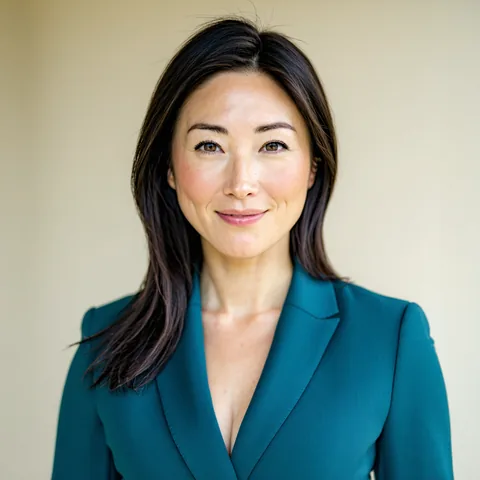
Jessica Tanaka
CEO & Co-Founder
Former 7th/8th grade STEM teacher. Built the original misconception taxonomy by hand. Portland, OR.
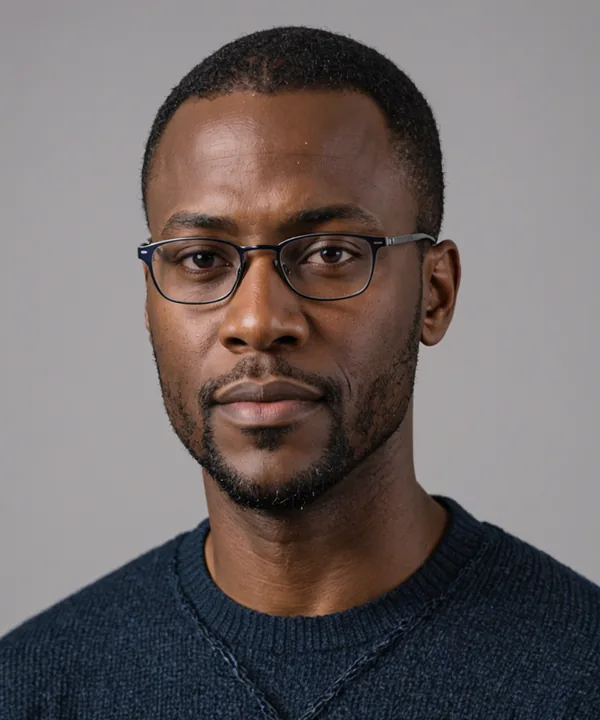
Marcus Osei
CTO & Co-Founder
ML engineer. Built the Bayesian hypothesis engine from Jessica's taxonomy framework.
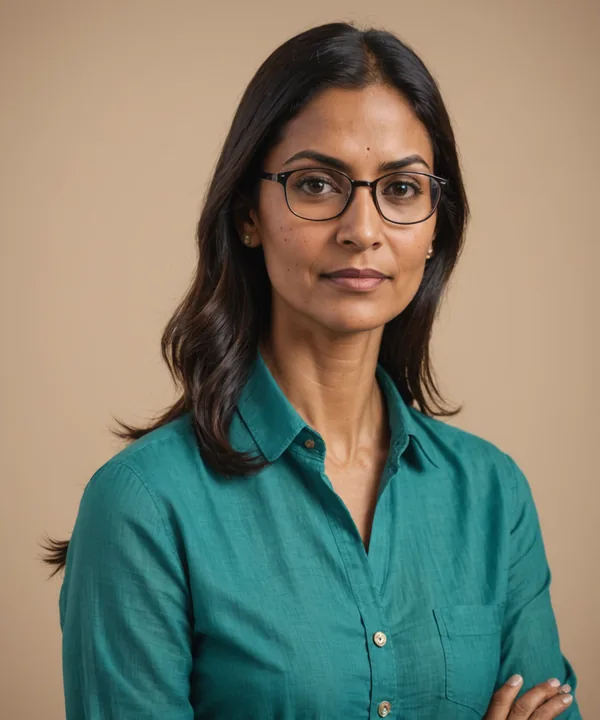
Priya Narayan
Head of Curriculum Science
Curriculum researcher. Links our misconception taxonomy to peer-reviewed research and state standards.
How we work
Four principles that shape everything we build
Research-grounded
Every misconception category in our taxonomy has a citation. We did not invent these — decades of mathematics and science education research documented them. We systematized and automated what researchers already knew.
Teacher-first
The platform surfaces information teachers can act on. Not dashboards full of data. Specific names, specific misconceptions, specific suggested next steps. Teachers should be able to close the app and know what to do in 5 minutes.
Specific over general
"Students struggle with fractions" is useless. "Three students in Period 3 have a part-whole confusion that specifically affects unlike-denominator addition" is actionable. We build toward precision, not coverage.
Honest about uncertainty
The engine generates hypotheses, not diagnoses. Every misconception alert includes a confidence level. When we're not sure, we say so. We don't show 100% confidence because nothing in education assessment is 100% confident.
Join the pilot. Help us get it right.
We're a small, early-stage team and we take pilot feedback seriously — it's how the engine's confidence thresholds have been calibrated. Your classroom is also your contribution to the research base.